
 ,
Likeng-Li-Ngue Benoit-Constant*,
Ndiang Zenabou,
Ntsomboh Ntsefong Godswill,
Mafouasson Apala Hortense Noëlle,
Molo Nathalie,
Bell Joseph Martin,
Ngalle Hermine Bille*
,
Likeng-Li-Ngue Benoit-Constant*,
Ndiang Zenabou,
Ntsomboh Ntsefong Godswill,
Mafouasson Apala Hortense Noëlle,
Molo Nathalie,
Bell Joseph Martin,
Ngalle Hermine Bille*
Understanding genetic diversity and germplasm classification through agro-morphological characterization is fundamental in order to provide information for genetic resources conservation and breeding programs. The overall objective of this study was to assess the genetic variability of watermelon varieties cultivated in Cameroon. Five watermelon (Citrullus lanatus) genotypes were evaluated for genetic variability, heritability, and genetic advance for yield and its contributing characters in watermelon during 2017. Analysis of variance showed significant variation for all the studied characters, indicating the presence of sufficient variability in the material. Germination rates of the five varieties vary from 61.11 ± 5.82 to 90.71 ± 1.12% for Sugar Baby and Kaolack. Emergence time ranges from 7.03 ± 0.87 (Kaolack) to 8.73 ± 1.03 (Koloss), while flowering time varies from 28.27 ± 0.45 (Crimson Sweet) to 36.24 ± 0.32 (Sugar Baby) days. The number of fruits (fruit count) show that Kaolack has the highest number of fruits per plant (3.55 ± 0.89), followed by Crimson Sweet (3.32 ± 0.5) while Koloss presents the lowest number of fruits per plant (2.12 ± 0.27). Of the 45 correlations performed, 26 were negative and 19 were positive. All negative correlations were not significant at the 5% level, while 5 positive correlations were significant. This result shows that length of fruit is correlated with weight of fruit (0.99) and weight of one hundred seeds (0.88). Moreover, the correlation between these two fruit characteristics (weight of fruit and length of fruit) appeared strong and positive (0.92). The phenotypic coefficient of variation ranged from 20.35 to 201.49 for the seed shape and weight of fruit parameters, respectively, while the genotypic coefficient of variation ranged from 17.72 to 198.65 for the same traits, respectively. All the traits studied showed that the phenotypic variance was higher than the genotypic variance. High broad-sense heritability coupled with moderate-high genetic advance was recorded for weight of one hundred seeds (11.63), while high broad-sense heritability associated with low genetic advance values was obtained for seed shape (0.21), seedling emergence time (5.89), and number of fruits per plant (6.43). Only the first two axes of the principal component analysis were taken into account because they explained about 92.31% of the variation observed in the varieties. The main parameters associated with these two axes were weight of fruit, length of fruit, flowering time, weight of one hundred seeds and life cycle. Based on the variation, 5 genotypes were grouped into three classes using the K-means classification. Further studies involving biochemical and molecular markers are recommended for deeper characterization.
| Published in | International Journal of Genetics and Genomics (Volume 14, Issue 1) |
| DOI | 10.11648/j.ijgg.20261401.12 |
| Page(s) | 14-24 |
| Creative Commons |
This is an Open Access article, distributed under the terms of the Creative Commons Attribution 4.0 International License (http://creativecommons.org/licenses/by/4.0/), which permits unrestricted use, distribution and reproduction in any medium or format, provided the original work is properly cited. |
| Copyright |
Copyright © The Author(s), 2026. Published by Science Publishing Group |
Citrullus lanatus, Agromorphological Traits, Genetic Variability, Genetic Advance
Parameters | Formulas | Meaning of terms |
|---|---|---|
Phenotypic variance (PV) | PV = VG + (MSE/r) = MSG/r | MSE: mean square of genotypes |
Genotypic variance (GV) | GV = (MSG – MSE)/r | MSG: mean square of genotypes |
Heritability in the broad sense (H2) | H2 (%) = (VG/VP)*100 | r: number of replicates |
Genotypic Coefficient of Variation (GCV) | GCV (%) = (VG√/X)*100 | √VG: standard deviation of genotypic variance |
Phenotypic Coefficient of Variation (PCV) | PCV (%) = (VP√/X)*100 | √VP: standard deviation of phenotypic variance |
Expected genetic gain (GA) | GA = H2√VP*l | I: constancy. For a selection coefficient of 5%. I = 2.06 |
Varieties | Plant characteristics. | Fruit characteristics. | seed characteristics | |||||||
|---|---|---|---|---|---|---|---|---|---|---|
GR (%) | ET (DAS) | FT (DAS) | LC (DAS) | NF | LF (cm) | DF (cm) | WF (kg) | WS (g) | SS (L/H) | |
Kaolack | 90.71 ± 1.12a | 7.03 ± 0.87b | 28.27 ± 0.45c | 79.57 ± 0.55c | 3.55 ± 0.89a | 21.05 ± 1.14b | 19.43 ± 2.06c | 6.03 ± 0.87b | 5.22 ± 0.01c | 0.65 ± 0.03ab |
Crimson sweet | 89.81 ± 3.07a | 8.28 ± 0.69ab | 28.79 ± 0.60c | 87.64 ± 1.11b | 3.32 ± 0.50a | 18.39 ± 1.53c | 22.04 ± 1.71b | 4.70 ± 0.42c | 4.60 ± 0.02e | 0.67 ± 0.02a |
Sugar baby | 61.11 ± 5.82b | 8.63 ± 0.28a | 36.24 ± 0.32a | 110.71 ± 1.40a | 2.13 ± 0.53b | 13.48 ± 0.55d | 16.14 ± 0.48d | 3.27 ± 0.26d | 4.64 ± 0.01d | 0.61 ± 0.01b |
Koloss | 67.59 ± 8.18b | 8.73 ± 1.03a | 30.11 ± 0.35b | 87.09 ± 0.55b | 2.12 ± 0.27b | 15.52 ± 0.69d | 25.02 ± 1.50a | 4.36 ± 0.33c | 5.39 ± 0.01b | 0.66 ± 0.04a |
Charleston gray | 69.44 ± 2.36b | 8.11 ± 0.39ab | 30.01 ± 0.54b | 85.96 ± 1.84b | 2.24 ± 0.16b | 29.54 ± 2.24a | 18.12 ± 0.88d | 8.94 ± 0.40a | 7.36 ± 0.03a | 0.64 ± 0.02ab |
Genetic Parameters | LF | DF | WF | NF | ET | WS | SS | GR | FT |
|---|---|---|---|---|---|---|---|---|---|
Maximum | 36,5 | 34 | 13,1 | 7 | 13 | 7,4 | 0,87 | 94,44 | 40 |
Minimum | 8,5 | 8,7 | 1,2 | 0 | 5 | 4,54 | 0,44 | 55,55 | 24 |
Overall mean | 19,6 | 20,15 | 5,46 | 2,67 | 8,15 | 5,44 | 0,64 | 75,73 | 30,68 |
Mean standard error | 2,64 | 2,65 | 1,06 | 0,84 | 1,01 | 0,1 | 0,04 | 2,74 | 1,09 |
Environmental variance | 20,95 | 21,11 | 3,39 | 2,15 | 3,04 | 0,001 | 0,001 | 22,45 | 3,59 |
Genotypic variance | 970,23 | 292,8 | 117,77 | 11,57 | 10,53 | 31,86 | 0,001 | 4632,93 | 225,65 |
Phenotypic variance | 991,18 | 313,92 | 121,16 | 13,72 | 13,57 | 31,86 | 0,017 | 4655,38 | 259,24 |
Environmental coefficient of variation | 23,35 | 22,8 | 33,72 | 54,9 | 21,36 | 0,41 | 10 | 6,26 | 6,17 |
genotypic Coefficient of variation | 158,92 | 81,91 | 198,65 | 127,31 | 39,8 | 103,74 | 17,72 | 89,88 | 52,11 |
Phenotypic coefficient of variation | 160,62 | 87,92 | 201,49 | 138,65 | 45,18 | 103,74 | 20,35 | 90,09 | 52,47 |
Heritability (in the broad sense) | 0,98 | 0,93 | 0,97 | 0,84 | 0,78 | 1 | 0,76 | 0,99 | 0,99 |
Genetic progress | 63,48 | 34,04 | 22,04 | 6,43 | 5,89 | 11,63 | 0,21 | 139,88 | 32,7 |
PCV | Phenotypic Coefficient of Variation |
GCV | Genotypic Coefficient of Variance |
PCA | Principal Component Analysis |
LSD | Least Significant Difference |
| [1] | Biswas, R., Ghosal, S., Chattopadhyay, A. and Datta, S. (2018) A Comprehensive Review on Watermelon Seed Oil – an Underutilized Product. IOSR Journal Of Pharmacy, 7, 01–07. |
| [2] | Boualem, A., Lemhemdi, A., Sari, M.-A., Pignoly, S., Troadec, C., Choucha, F. A., Solmaz, I., Sari, N., Dogimont, C. and Bendahmane, A. (2016) The Andromonoecious Sex Determination Gene Predates the Separation of Cucumis and Citrullus Genera. PLOS ONE, Public Library of Science, 11, e0155444. |
| [3] | Bahari, M., Rafii, M. Y., Saleh, G. B. and Latif, M. A. (2012) Combining Ability Analysis in Complete Diallel Cross of Watermelon (Citrullus Lanatus (Thunb.) Matsum. & Nakai). The Scientific World Journal, 2012, 543158. |
| [4] | Falade, O. S., Otemuyiwa, I. O., Adekunle, A. S., Adewusi, S. A. and Oluwasefunmi, O. (2020) Nutrient Composition of Watermelon (Citrullis Lanatus (Thunb.) Matsum.&Nakai) and Egusi Melon (Citrullus Colocynthis (L.) Schrad.) Seeds. Agriculturae Conspectus Scientificus, 85, 43–49. |
| [5] | Achiri, T. D., Konje, C. N., Nkuh, A. A. and Nsobinenyui, D. (2019) Comparative Studies on Watermelon Production in the North West and South West Regions of Cameroon: A Rural and a Peri- Urban Experience. IOSR Journal of Agriculture and Veterinary Science, 12, 55–68. |
| [6] | Ghauri, A. O., Farrukh, U., Fatima, N., Khalid, S., Kamal, S. and Azhar, I. (2023) A Mini Review of Phytoconstituents and Pharmacological Activities of Citrullus Lanatus (Thunb.). International Journal of Natural Medicine and Health Sciences, 2, 7–11. |
| [7] | Akintunde, O. G. and Thomas, F. C. (2021) Review of Studies Published on the Medicinal Importance of Different Parts of Citrullus Lanatus in the Last Ten Years. Biological Research, 19, 1372–1387. |
| [8] | Nnenne, S. K., Ubaoji, K. I., Ogbodo, U. C., Enemor, V. H. A. and Oladejo, A. A. (2020) Comparative Study on the Nutritional and Antioxidant Components of Fruit Parts of Citrullus Lanatus. European Journal of Nutrition & Food Safety, Sciencedomain International, 12, 39–51. |
| [9] | Davis, A., Webber, C., Perkins, P., Russo, V., Galarza, S. and Sakata, Y. (2008) A Review of Production Systems on Watermelon Quality 1. |
| [10] | Tester, M. and Langridge, P. (2010) Breeding Technologies to Increase Crop Production in a Changing World. Science, 327, 818–822. |
| [11] | Agah, L. J., Ankrumah, E. S., Ukatu, P. O., Ittah, M. A. and David, G. S. (2021) Genetic Performance of Some Watermelon [Citrullus Lanatus (Thumb.) Mastum and Nakai] Genotypes in Humid Tropical Agro-Ecology. International Journal of Plant & Soil Science, 33, 141–148. |
| [12] | Bi, I. A. Z., Koffi, K. K. and Djè, Y. (2003) Caractérisation botanique et agronomique de trois espèces de cucurbites consommées en sauce en Afrique de l’Ouest : Citrullus sp., Cucumeropsis mannii Naudin et Lagenaria siceraria (Molina) Standl. Biotechnology, Agronomy, Society and Environment, 7, 189–199. |
| [13] | Oraegbunam, C. J., Njoku, O. M., Imoh, O. N., Obalum, S. E., Onyia, V. N., Atugwu, A. I. and Uchida, Y. (2016) Agronomic Performance and Adaptability of Three Varieties of Watermelon (Citrullus Lanatus) on Sandy Loam Soil in Derived Savanna. Agro-Science, 15, 46–50. |
| [14] | Siéné, L. A. C., Soko, D. F., Coulibaly, L. F., Sanoko, F. K. and Koné, M. (2018) Caractérisation agro-morphologique de cinq variétés de Cucurbitacées cultivées dans la région de Korhogo (Côte d’Ivoire). Journal of Animal & Plant Sciences, 37, 6033–6040. |
| [15] | Hajam, M. A., Bhat, T. A., Rather, A. M., Khan, S., Reyaz, L., Hajam, M. and Paul, S. (2018) Genetic Variability, Heritability (Bs) and Genetic Advance for Various Qualitative Characters of Potato. International Journal of Chemical Studies, 6, 518–522. |
| [16] | Tessema, G. L., Mohammed, A. W. and Abebe, D. T. (2022) Genetic Variability Studies for Tuber Yield and Yield Attributes in Ethiopian Released Potato (Solanum Tuberosum L.) Varieties. PeerJ, 10, 14. |
| [17] | Danbe, N., Yakouba, O., Sobda, G., Basga, S. D., Lendzemo, V., Kaouvon, P., Dickmi, V. C., Suh, C., Djonnewa, A., Youri, A. and Kaboui, A. (2019) Caractérisation de la diversité phénotypique et génotypique du Sorgho pluvial dans la zone soudano sahélienne du Cameroun. Journal of Applied Biosciences, 129, 12973–12981. |
| [18] | Ferdoush, A., Haque, M., Rashid, M. and Bari, M. (2017) Variability and Traits Association in Maize (Zea Mays L.) for Yield and Yield Associated Characters. Journal of the Bangladesh Agricultural University, 15, 193–198. |
| [19] | Medagam, T. R., Begum, H. and Rao, N. H. (2015) Genetic Diversity and Variability in Landraces for Key Agroeconomic Traits in Vegetable Roselle (Hibiscus Sabdariffa Var. Sabdariffa L.). Jordan Journal of Biological Sciences, 8, 113–125. |
| [20] | Singha, L. and Ullah, Z. (2020) Genetic Variability Studies for Yield and It’s Attributing Traits in Potato (Solanum Tuberosum L.). International Journal of Current Microbiology and Applied Sciences, 9, 1974–1983. |
| [21] | Cabral Maia, M. C., Almeida, A. D. S., Borges De Araujo, L., Tadeu Dos Santos Dias, C., Cláudio De Oliveira, L., Ken Iti Yokomizo, G., Domiciano Silva Rosado, R., Damião Cruz, C., Lopes Vasconcelos, L. F., Sarmanho Da Costa Lima, P. and Macedo, L. M. (2019) Principal Component and Biplot Analysis in the Agro-Industrial Characteristics of Anacardium Spp. European Scientific Journal ESJ, 15, 21–31. |
| [22] | Elbekkay, M., Hamza, H., Neily, M. H., Djebali, N. and Ferchichi, A. (2021) Characterization of Watermelon Local Cultivars from Southern Tunisia Using Morphological Traits and Molecular Markers. Euphytica, 217, 1–15. |
| [23] | Jagtap, B. and Bhuktar, A. (2021) Variability Study in Watermelon (Citrullus Lanatus). International Journal of Botany Studies, 6, 788–791. |
| [24] | Şahin, N. (2024) Morphological Characterization of Some Local Watermelon (Citrullus Lanatus L.) Genotypes of Turkey. International Journal of Life Sciences and Biotechnology, International Society of Academicians, 7, 28–36. |
| [25] | Amzeri, A., Badami, K., Gita, P., Alfiyan Syah, Moh. and Setiadi Daryono, B. (2021) Phenotypic and Genetic Diversity of Watermelon (Citrullus Lanatus) in East Java, Indonesia. Biodiversitas Journal of Biological Diversity, 22, 5223–5230. |
| [26] | Ebadi, M., Soltani, F., Mostofi, Y. and Alabboud, M. (2022) Analysis of Genetic Diversity among Watermelon [Citrullus Lunatus Thunb (Matsum.) and Nakai] Accessions by Phenotypic and Molecular Markers. Journal of Agriculture, Science and Technology, 24, 429–440. |
| [27] | Szamosi, C., Solmaz, I., Sari, N. and Bársony, C. (2009) Morphological Characterization of Hungarian and Turkish Watermelon (Citrullus Lanatus (Thunb.) Matsum. et Nakai) Genetic Resources. Genetic Resources and Crop Evolution, 56, 1091–1105. |
| [28] | Gusmini, G. and Wehner, T. C. (2007) Heritability and Genetic Variance Estimates for Fruit Weight in Watermelon. HortScience, 42, 1332–1336. |
| [29] | Hakimi, F. (2015) Variability of Agro-Morphological Traits in Some Moroccan Watermelon Landraces (Citrullus Lanatus Thunb. Matsum. and Nakai). International Journal of Current Research, 17, 1–8. |
| [30] | Sattar, M. A., Sultana, N., Hossain, M. M., Rashid, M. H. and Islam, A. K. M. A. (2007) GENETIC VARIABILITY, CORRELATION AND PATH ANALYSIS IN POTATO (Solanum Tuberosum L.). Bangladesh Journal of Plant Breeding and Genetics, 20, 33–38. |
| [31] | Yildiz, M., Akgul, N. and Sensoy, S. (2014) Morphological and Molecular Characterization of Turkish Landraces of Cucumis Melo L. Notulae Botanicae Horti Agrobotanici Cluj-Napoca, 42, 51–58. |
| [32] | Sanou, A., Konate, K., Dakuyo, R., Kabore, K., Sama, H. and Dicko, M. H. (2022) Hibiscus Sabdariffa: Genetic Variability, Seasonality and Their Impact on Nutritional and Antioxidant Properties. Islam, M. Z., Ed., PLOS ONE, 17, 1–15. |
| [33] | Soghani, Z. N., Rahimi, M., Nasab, M. A. and Maleki, M. (2018) Grouping and Genetic Diversity of Different Watermelon Ecotypes Based on Agro-Morphological Traits and ISSR Marker. Iheringia, Série Botânica, 73, 53–59. |
APA Style
Ernest, F. P., Benoit-Constant, L., Zenabou, N., Godswill, N. N., Noëlle, M. A. H., et al. (2026). Assessment of Genetic Variability and Character Association of Watermelon (Citrullus lanatus) varieties Using Agromorphological Characters. International Journal of Genetics and Genomics, 14(1), 14-24. https://doi.org/10.11648/j.ijgg.20261401.12
ACS Style
Ernest, F. P.; Benoit-Constant, L.; Zenabou, N.; Godswill, N. N.; Noëlle, M. A. H., et al. Assessment of Genetic Variability and Character Association of Watermelon (Citrullus lanatus) varieties Using Agromorphological Characters. Int. J. Genet. Genomics 2026, 14(1), 14-24. doi: 10.11648/j.ijgg.20261401.12
AMA Style
Ernest FP, Benoit-Constant L, Zenabou N, Godswill NN, Noëlle MAH, et al. Assessment of Genetic Variability and Character Association of Watermelon (Citrullus lanatus) varieties Using Agromorphological Characters. Int J Genet Genomics. 2026;14(1):14-24. doi: 10.11648/j.ijgg.20261401.12
@article{10.11648/j.ijgg.20261401.12,
  author = {Fokam Paul Ernest and Likeng-Li-Ngue Benoit-Constant and Ndiang Zenabou and Ntsomboh Ntsefong Godswill and Mafouasson Apala Hortense Noëlle and Molo Nathalie and Bell Joseph Martin and Ngalle Hermine Bille},
  title = {Assessment of Genetic Variability and Character Association of Watermelon (Citrullus lanatus) varieties Using Agromorphological Characters},
  journal = {International Journal of Genetics and Genomics},
  volume = {14},
  number = {1},
  pages = {14-24},
  doi = {10.11648/j.ijgg.20261401.12},
  url = {https://doi.org/10.11648/j.ijgg.20261401.12},
  eprint = {https://article.sciencepublishinggroup.com/pdf/10.11648.j.ijgg.20261401.12},
  abstract = {Understanding genetic diversity and germplasm classification through agro-morphological characterization is fundamental in order to provide information for genetic resources conservation and breeding programs. The overall objective of this study was to assess the genetic variability of watermelon varieties cultivated in Cameroon. Five watermelon (Citrullus lanatus) genotypes were evaluated for genetic variability, heritability, and genetic advance for yield and its contributing characters in watermelon during 2017. Analysis of variance showed significant variation for all the studied characters, indicating the presence of sufficient variability in the material. Germination rates of the five varieties vary from 61.11 ± 5.82 to 90.71 ± 1.12% for Sugar Baby and Kaolack. Emergence time ranges from 7.03 ± 0.87 (Kaolack) to 8.73 ± 1.03 (Koloss), while flowering time varies from 28.27 ± 0.45 (Crimson Sweet) to 36.24 ± 0.32 (Sugar Baby) days. The number of fruits (fruit count) show that Kaolack has the highest number of fruits per plant (3.55 ± 0.89), followed by Crimson Sweet (3.32 ± 0.5) while Koloss presents the lowest number of fruits per plant (2.12 ± 0.27). Of the 45 correlations performed, 26 were negative and 19 were positive. All negative correlations were not significant at the 5% level, while 5 positive correlations were significant. This result shows that length of fruit is correlated with weight of fruit (0.99) and weight of one hundred seeds (0.88). Moreover, the correlation between these two fruit characteristics (weight of fruit and length of fruit) appeared strong and positive (0.92). The phenotypic coefficient of variation ranged from 20.35 to 201.49 for the seed shape and weight of fruit parameters, respectively, while the genotypic coefficient of variation ranged from 17.72 to 198.65 for the same traits, respectively. All the traits studied showed that the phenotypic variance was higher than the genotypic variance. High broad-sense heritability coupled with moderate-high genetic advance was recorded for weight of one hundred seeds (11.63), while high broad-sense heritability associated with low genetic advance values was obtained for seed shape (0.21), seedling emergence time (5.89), and number of fruits per plant (6.43). Only the first two axes of the principal component analysis were taken into account because they explained about 92.31% of the variation observed in the varieties. The main parameters associated with these two axes were weight of fruit, length of fruit, flowering time, weight of one hundred seeds and life cycle. Based on the variation, 5 genotypes were grouped into three classes using the K-means classification. Further studies involving biochemical and molecular markers are recommended for deeper characterization.},
 year = {2026}
}
TY  - JOUR
T1  - Assessment of Genetic Variability and Character Association of Watermelon (Citrullus lanatus) varieties Using Agromorphological Characters
AU  - Fokam Paul Ernest
AU  - Likeng-Li-Ngue Benoit-Constant
AU  - Ndiang Zenabou
AU  - Ntsomboh Ntsefong Godswill
AU  - Mafouasson Apala Hortense Noëlle
AU  - Molo Nathalie
AU  - Bell Joseph Martin
AU  - Ngalle Hermine Bille
Y1  - 2026/02/26
PY  - 2026
N1  - https://doi.org/10.11648/j.ijgg.20261401.12
DO  - 10.11648/j.ijgg.20261401.12
T2  - International Journal of Genetics and Genomics
JF  - International Journal of Genetics and Genomics
JO  - International Journal of Genetics and Genomics
SP  - 14
EP  - 24
PB  - Science Publishing Group
SN  - 2376-7359
UR  - https://doi.org/10.11648/j.ijgg.20261401.12
AB  - Understanding genetic diversity and germplasm classification through agro-morphological characterization is fundamental in order to provide information for genetic resources conservation and breeding programs. The overall objective of this study was to assess the genetic variability of watermelon varieties cultivated in Cameroon. Five watermelon (Citrullus lanatus) genotypes were evaluated for genetic variability, heritability, and genetic advance for yield and its contributing characters in watermelon during 2017. Analysis of variance showed significant variation for all the studied characters, indicating the presence of sufficient variability in the material. Germination rates of the five varieties vary from 61.11 ± 5.82 to 90.71 ± 1.12% for Sugar Baby and Kaolack. Emergence time ranges from 7.03 ± 0.87 (Kaolack) to 8.73 ± 1.03 (Koloss), while flowering time varies from 28.27 ± 0.45 (Crimson Sweet) to 36.24 ± 0.32 (Sugar Baby) days. The number of fruits (fruit count) show that Kaolack has the highest number of fruits per plant (3.55 ± 0.89), followed by Crimson Sweet (3.32 ± 0.5) while Koloss presents the lowest number of fruits per plant (2.12 ± 0.27). Of the 45 correlations performed, 26 were negative and 19 were positive. All negative correlations were not significant at the 5% level, while 5 positive correlations were significant. This result shows that length of fruit is correlated with weight of fruit (0.99) and weight of one hundred seeds (0.88). Moreover, the correlation between these two fruit characteristics (weight of fruit and length of fruit) appeared strong and positive (0.92). The phenotypic coefficient of variation ranged from 20.35 to 201.49 for the seed shape and weight of fruit parameters, respectively, while the genotypic coefficient of variation ranged from 17.72 to 198.65 for the same traits, respectively. All the traits studied showed that the phenotypic variance was higher than the genotypic variance. High broad-sense heritability coupled with moderate-high genetic advance was recorded for weight of one hundred seeds (11.63), while high broad-sense heritability associated with low genetic advance values was obtained for seed shape (0.21), seedling emergence time (5.89), and number of fruits per plant (6.43). Only the first two axes of the principal component analysis were taken into account because they explained about 92.31% of the variation observed in the varieties. The main parameters associated with these two axes were weight of fruit, length of fruit, flowering time, weight of one hundred seeds and life cycle. Based on the variation, 5 genotypes were grouped into three classes using the K-means classification. Further studies involving biochemical and molecular markers are recommended for deeper characterization.
VL  - 14
IS  - 1
ER  -
Laboratory of Genetics and Plant Breeding, Department of Plant Biology, Faculty of Science, University of Yaoundé I, Yaoundé, Cameroon
Research Fields: Plant biotechnologist.
Laboratory of Genetics and Plant Breeding, Department of Plant Biology, Faculty of Science, University of Yaoundé I, Yaoundé, Cameroon;Research and Support Centre for Agropastoral Producers in Cameroon (CRAPAC), Yaoundé, Cameroon
Biography: Likeng-Li-Ngue Benoit-Constant (Date of birth: July 16, 1984) holds a PhD in Plant Biotechnology with a major in genetics and plant improvement (2019). He is Lecturer at the Department of Plant Biology, Faculty of Sciences (since 2020), Director of Research and Cooperation at the Higher Institute of Agriculture and Management of Obala (ISAGO, since 2019), National Coordinator of the organization of the Cameroonian Contest of Local Products (CCPT) at United Nations Industrial Development Organization (UNIDO), Coordinator of the Genetics and Plant Improvement Unit of the University of Yaoundé I (since 2014), Promoter of the Research and Support Center for Agropastoral Producers of Cameroon (CRAPAC, since 2022) Consultant to the Network of Sustainable Development Actors (RADD).
Research Fields: Plant biotechnologist, genetic and plant improvement, plant breeding.

Department of Plant Biology, Faculty of Science, University of Douala, Douala, Cameroon
Research Fields: genetic and plant improvement, plant breeding.
Laboratory of Genetics and Plant Breeding, Department of Plant Biology, Faculty of Science, University of Yaoundé I, Yaoundé, Cameroon
Research Fields: biotechnologist.
Institute of Agricultural Research for Development, Yaoundé, Cameroon
Research Fields: Crops improvement.
Laboratory of Genetics and Plant Breeding, Department of Plant Biology, Faculty of Science, University of Yaoundé I, Yaoundé, Cameroon;Research and Support Centre for Agropastoral Producers in Cameroon (CRAPAC), Yaoundé, Cameroon
Research Fields: data analyst, plant production.
Laboratory of Genetics and Plant Breeding, Department of Plant Biology, Faculty of Science, University of Yaoundé I, Yaoundé, Cameroon
Research Fields: genetic and plant improvement, plant breeding.
Laboratory of Genetics and Plant Breeding, Department of Plant Biology, Faculty of Science, University of Yaoundé I, Yaoundé, Cameroon
Research Fields: genetic, genetic variability of traits.
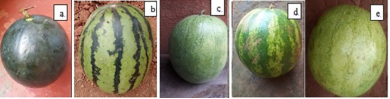
Figure 1. Fruits of the five watermelon varieties. a: Sugar baby, b: Koloss, c: Charleston gray, d: Crimson sweet, e: Kaolack.
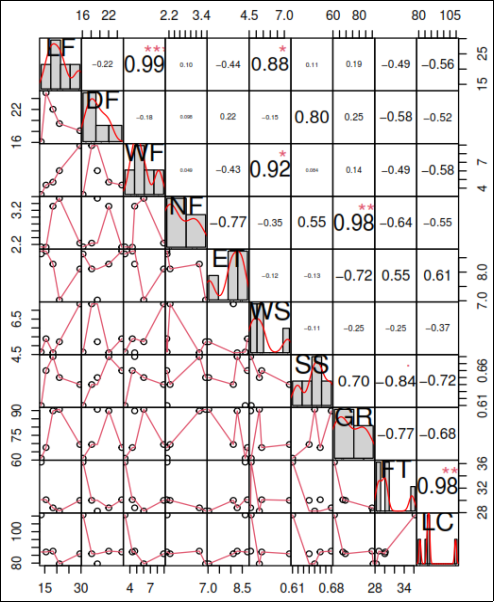
Figure 2. Correlation coefficients (r) between the agro-morphological parameters.
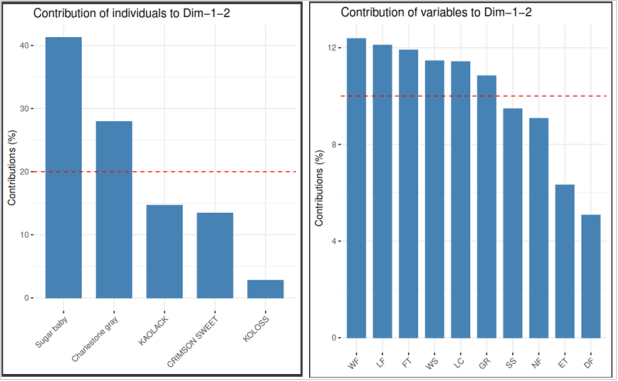
Figure 3. Contribution of the parameters and varieties to the construction of axes 1 and 2.
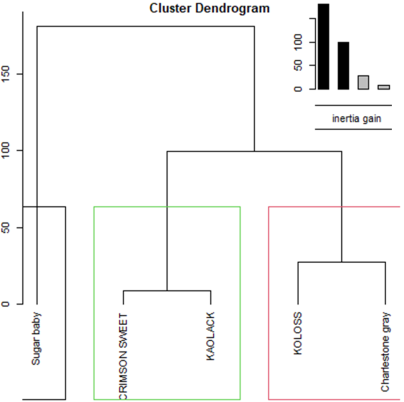
Figure 4. Grouping of five watermelons divided into three clusters based on ten agro-morphological characters.



 Share This Article
 Twitter
 Linked In
 Facebook
 Copy
Copy Download